The life of Hugh Hefner led to sorrow on an enormous scale. To be sure, there are those who consider his pioneering Playboy endeavors to have been liberating and wonderfully progressive, and a source of great happiness. But, at root, what he did was encourage millions and millions of men to objectify women and diminish them into "roles not souls"--see Jon Bloom's thoughtful analysis along these lines. So sad.
A collection of thoughts, questions, and challenges for the journey of spiritual life with Jesus Christ. * * * Posted by Peter K. Nelson
Friday, September 29, 2017
Sorrow on an Enormous Scale
The life of Hugh Hefner led to sorrow on an enormous scale. To be sure, there are those who consider his pioneering Playboy endeavors to have been liberating and wonderfully progressive, and a source of great happiness. But, at root, what he did was encourage millions and millions of men to objectify women and diminish them into "roles not souls"--see Jon Bloom's thoughtful analysis along these lines. So sad.
Thursday, July 07, 2016
Me Before You?
Joni Eareckson Tada is someone with the credibility to speak to the question of physician-assisted suicide when it comes to cases of disability. We do well to take note of her thoughts in connection with the recent movie, "Me Before You."
Monday, December 07, 2015
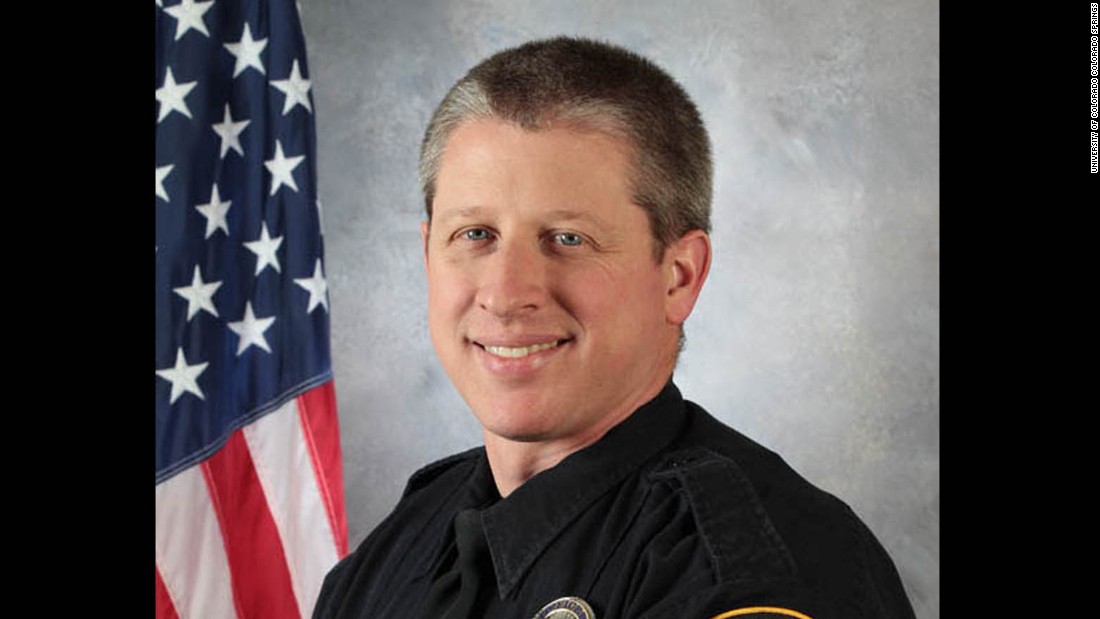
Remembering Officer Garrett Swasey
Police officer Garrett Swasey lost his life seeking to protect and defend others on Nov. 27 when he responded to a call to assist law enforcement on the scene at a Colorado Springs Planned Parenthood clinic where a gunman was on a violent rampage. Officer Swasey was also a co-pastor of his church, Hope Chapel, where he delivered his last sermon on Nov. 15, including a poignant call to consider Christ and not delay: don't assume you've got tomorrow--tomorrow may not come. See Jordan Standridge's overview of Swasey's sermon.
Monday, June 15, 2015
Elisabeth Elliot (1926-2015)
So thankful for the clear, bold, wise, courageous discipleship of Elisabeth Elliot. See the many tributes that have appeared today, e.g., from John Piper, Justin Taylor, Kate Shellnutt, and Joe Carter.
I remember hearing her speak at Urbana '79, especially the way she handled Q and A with tact, directness, and how she got beneath the surface questions to matters of the heart--pointing everyone to the lordship of Jesus Christ.
Friday, April 10, 2015
Twenty-Two Years Like a Day
Wednesday, March 25, 2015
Peace the Passes Understanding
Thursday, April 17, 2014
Logic of the Resurrection
.
Friday, April 11, 2014
Visits to Heaven?
.
Wednesday, January 22, 2014
Sobering Information about Abortion
See also David Murray's list of resources on this topic.
.
Saturday, December 21, 2013
Ronnie Smith Killed in Libya
On Dec. 5, 2013, American teacher Ronnie Smith was shot to death while jogging near his home in Benghazi, Libya. Smith had been a Chemistry teacher at an international school in Benghazi for the last year and a half. Prior to that he had served on the ministry staff at Austin Stone Community Church in Texas.
ASCC provides helpful guidance and resources for their congregation, and for the wider public, in the aftermath of this tragedy. If you want to get a feel for Ronnie's passion for Christ and the gospel, watch his sermon, "The History of Redemption" (see video below), which is made up entirely of memorized Scripture. He tells the story of the whole Bible, and he tells it well.
Ronnie's widow, Anita Smith, has spoken out in a CBS interview in a most thoughtful, gracious, kind, Christ-honoring way. Especially noteworthy is her open letter to the Libyan people, along with her specific remarks to the killers of her husband. See also her remarkable interview with CNN's Anderson Cooper. Note also this collection of news reports.
"For I am sure that neither death nor life, nor angels nor rulers, nor things present nor things to come, nor powers, nor height nor depth, nor anything else in all creation, will be able to separate us from the love of God in Christ Jesus our Lord" (Romans 8:38-39, ESV).
Jesus said, "In the world you will have tribulation. But take heart; I have overcome the world" (John 16:33).
Sermon - The History of Redemption from The Austin Stone on Vimeo.
.
Friday, October 25, 2013
Live Forever?
Thursday, October 03, 2013
The Gospel and the Fear of Death
Friday, September 16, 2011
Alzheimer's and Divorce
Monday, July 18, 2011
A Precious Promise!
Hebrews 13:5 gives believers priceless comfort: God says, “Never will I leave you; never will I forsake you.” In other words, no circumstance in all the world (use your imagination) can separate Jesus’ loved ones from him. The Greek in 13:5 piles up negatives—five of them—to say with fierce certainty: the Lord NEVER abandons his children.
So too, our Good Shepherd offers similar promises of his invincible care in John 10:27-29: “My sheep listen to my voice; I know them, and they follow me. I give them eternal life, and they shall never perish; no one can snatch them out of my hand. My Father, who has given them to me, is greater than all; no one can snatch them out of my Father’s hand.”
Of course, Hebrews 13 also shows that sometimes God’s people do end up in prison (v 3). And 10:32-34 speaks of believers having their homes plundered and facing intense persecution. So this letter is not naïve; there’s no promise of sheer smooth sailing. If you’re interested in Jesus in order to get a comfortable ride through this rugged world, think again: that’s not the Jesus of the Bible.
God promises to be with us, not to make life easy. “… neither death nor life, neither angels nor demons, neither the present nor the future, nor any powers, neither height nor depth, nor anything else in all creation, will be able to separate us from the love of God that is in Christ Jesus our Lord” (Romans 8:38-39).
When Hebrews 13:6 declares “I will not be afraid,” a poignant question follows: “What can man do to me?” And, of course, people can do a lot of terrible things to us—steal from, malign, hurt, even kill us. That’s precisely what Hebrews 13:3 and Romans 8:38-39 acknowledge. But fear not, that’s all they can do: all they can do is kill you.
What people CANNOT do to you is infinitely more important: Satan and his demons and anti-Christian enemies around us cannot touch our Heavenly Father’s love for us and our secure standing as his justified, redeemed, adopted, chosen, forgiven children! In Christ your inheritance is secure (it’s “imperishable, undefiled, and unfading, kept in heaven for you,” 1 Peter 1:4; see also John 16:33; 1 John 4:4).
So then, with thanks for these priceless promises, make sure: 1) your hope in Jesus ultimately is centered on the eternal consolations of the life to come and not on being spared trouble today, and 2) your faith is ready to face and stand up under pressure.
.
Wednesday, March 16, 2011
Disaster in Japan

For images from
Here are a couple of very good options for contributing to disaster relief and the spread of Christ's love in
- Through SEND International
- Through Samaritan’s Purse
I appreciate the Prayer for
Father in heaven, you are the absolute Sovereign over the shaking of the earth, the rising of the sea, and the raging of the waves. We tremble at your power and bow before your unsearchable judgments and inscrutable ways. We cover our faces and kiss your omnipotent hand. We fall helpless to the floor in prayer and feel how fragile the very ground is beneath our knees.
O God, we humble ourselves under your holy majesty and repent. In a moment—in the twinkling of an eye—we too could be swept away. We are not more deserving of firm ground than our fellowmen in
And we cry for mercy for
Have you not encouraged us in this? Have we not heard a hundred times in your Word the riches of your kindness, forbearance, and patience? Do you not a thousand times withhold your judgments, leading your rebellious world toward repentance? Yes, Lord. For your ways are not our ways, and your thoughts are not our thoughts.
Grant, O God, that the wicked will forsake his way, and the unrighteous man his thoughts. Grant us, your sinful creatures, to return to you, that you may have compassion. For surely you will abundantly pardon. Everyone who calls on the name of the Lord Jesus, your beloved Son, will be saved.
May every heart-breaking loss—millions upon millions of losses—be healed by the wounded hands of the risen Christ. You are not unacquainted with your creatures' pain. You did not spare your own Son, but gave him up for us all.
In Jesus you tasted loss. In Jesus you shared the overwhelming flood of our sorrows and suffering. In Jesus you are a sympathetic Priest in the midst of our pain.
Deal tenderly now, Father, with this fragile people. Woo them. Win them. Save them.
And may the floods they so much dread make blessings break upon their head.
O let them not judge you with feeble sense, but trust you for your grace. And so behind this providence, soon find a smiling face.
In Jesus’ merciful name, Amen.
.
Tuesday, April 06, 2010
Resurrection as Keystone
You simply can’t overstate the bedrock importance in Christianity of Jesus’ resurrection from the dead. Put it this way: the resurrection is the keystone at the center of God’s grand arch spanning from history to eternity, bridging over the chasm of sin and death; without it, the whole structure of salvation comes tumbling down.
This, of course, means the resurrection—Christ’s historical, physical return from death to life—is not one of those peripheral points or secondary issues on which believers may feel free to differ. No, it’s pivotal and essential. I base this on Paul’s clear and relentless line of argumentation in 1 Corinthians 15:14-19. IF Jesus Christ was not raised from the dead...
- - Faith in Christ is useless and futile;
- - Preaching of Christ and spreading the Gospel are in vain;
- - Believers are false witnesses—we’re liars (i.e., about Jesus being raised and about our future beyond this life);
- - Believers are still in their sins—i.e., not forgiven, guilty of violating God’s justice and holiness, enemies of God;
- - Christians who’ve died are hopelessly lost forever;
- - We’re a pitiful lot—more pitiful than any other people on earth.
So the resurrection of Jesus is right at the heart of Christian belief—deny it or dismiss it or reduce it to some notion of “living on in our memory” and, very simply, it you’re no longer dealing with New Testament Christianity.
As you reflect on the importance of Christ’s resurrection, I hope it strikes you as glorious and breathtaking! Giving mental assent to Bible truths is crucial, but crucial as well is “getting it” deep down in your soul. The resurrection is no mere fact: it’s God’s magnificent stroke of victory in battle against sin, Satan and death (does your heart leap up and cheer?). And it’s the ray of hope for all who trust Jesus for true eternal life!
So stand in awe: Christ is risen—he is risen indeed!
.
Saturday, June 27, 2009
Fame and Death
Both Michael Jackson and Farrah Fawcett departed from this life on Thursday, June 25. Both were superstars in their own ways, and both of their stormy lives have been receiving major media attention the last few days. I’ve noticed a couple ironies amidst the whirr of all this coverage.
First of all, it’s obvious that famous people get the limelight not only in life but also death, whereas the other 99+% of humanity comes and goes from this world in relative obscurity. The media didn’t pick up on the parting of Mary Binnig, Joe Dent, or Henry Wright (other than to print their death notices in the obituary section of the Philadelphia Inquirer on 6/26/09), nor did it make much of the hundreds who’ve died in Somalia in the recent months’ unrest or of fatalities from cholera in Zimbabwe. Fame grabs our attention, pushing the unknown aside—we’re not interested in them. And yet, all people, deep down, are equally made in the image of God (Gen 1:27). All people alike are formed by God (Ps 139:13-15) with the capacity to know him and revel in his radiance forever. Jesus specialized in loving the unlovely, the outcast (e.g., Luke 5:27-32; 7:36-50; 15:1-2).
Dostoyevsky’s famous novel, Crime and Punishment, tells the chilling tale of an experiment in murder. Raskolnikov brutally kills two women—people he sees as “no account” figures, “useless” lives. But he cannot escape the reality that a life is a life and that human existence has meaning and dignity quite apart from one’s stature in society. The image of God in every person cannot be shrugged off. Eventually he can’t keep from confessing to his crimes, so heavy on his heart is the destruction of these “nobodies.”
Secondly, the way our popular culture processes death involves a couple irrational and contradictory notions. On the one hand, it’s assumed that anybody’s loved one who dies is now “up there looking down on us.” This was Jermaine Jackson’s assumption when he announced his brother’s death. Sad stories on ABC’s “Extreme Makeover: Home Edition” are similar—lost loved ones are always “with us” and “watching us,” etc. On the other hand, in ordinary days it’s almost never taken seriously that there is a life to come that’s real and important and grand, and that this present existence is but a prelude to eternal experience either in the presence of God (basking in the wonder of his glory) or in the absence of God (suffering the just punishment of unforgiven sin). It’s as if the life to come can be entirely ignored while we’re healthy and strong, and then conveniently brought out in the moment of grief— though always, of course, assuming a positive outcome.
We need to help each other avoid these errors by doing two things: keep the reality of heaven and hell in view at all times (don’t let these looming eternal facts slip off your mind’s radar screen), and take Jesus seriously that, apart from trusting in him (John 3:16; 14:6; etc.), people follow their hearts down the road to destruction (Matt 7:13-14). In other words: live now in light of eternity, and live now in a way that accepts and acts upon the sobering reality of hell.
Tuesday, June 23, 2009
Picturing Heaven
How do you envision the life to come? Revelation 21-22 paints a picture of the glorious new heavens and new earth: the ultimate wedding celebration (21:2, 9); no more tears or grief or pain (21:4); we drink at the fountain of life (21:6); the New Jerusalem is radiant, massive, gleaming—and in that world there’s no night: the glory of God is its light (21:23-25).
As the Apostle John scrambles for images and metaphors to help us imagine what he saw in the definitive revelation of what’s to come (1:11, 19), it begins to dawn on us—if we’ll just be quiet and sit still and take it in—that the future world for all who eagerly await Jesus’ return (Heb 9:28) will be awesome beyond belief!
Romans 8:18 makes a similar point but from a different angle: “I consider that our present sufferings are not worth com paring with the glory that will be revealed in us.” Today’s trials, even Paul’s manifold, gut-wrenching afflictions (see 2 Cor 11:23-29), are minimal-miniscule-inconsequential when compared to the glories of heaven. This is not to minimize the real pain of suffering—not at all. Rather, it’s to underscore how mind-boggling and category-demolishing are the wonders of the life to come.
Let this sink in. Think of our world’s most grave tribulations—as in Hebrews 11:35-38 (torture, scourging, stoning, being sawn in two). Think of AIDS and cholera and earthquakes and suicide bombings and serial murders… Let the sorrow and horror of these things wash over you like a great wave: yes, they’re wretched beyond words. But then remember that the degree of heaven’s splendor makes the degree of misery in such suffering seem like nothing. Do the math: if being sawn in two scores -10 on a scale of 1 to 10, heaven scores +1,000,000. That’s why Paul can call his mountain of trials a “slight momentary affliction” (2 Cor 4:17).
Are you facing pain, are your loved ones suffering? Let today’s adversity catapult your imagination God-ward—let it help you envision the joy awaiting all who love Jesus. Because today’s misery is not even worth comparing to the glories of heaven!
.
Friday, April 17, 2009
Hope in Christ "only for this life"?
God’s word of Easter hope from 1 Corinthians 15 is glorious—hundreds of eyewitnesses confirming Christ’s resurrection, and as the “first-fruits” of victory over death the risen Lord promises that all “who belong to him” will rise again to true, eternal life (v 23). This is “good news” (v 1)—the greatest news! But 15:19 still reverberates in my mind: “If only for this life we have hope in Christ, we are to be pitied more than all men.” Is it possible that we could fall back into that pitiful state?
In our day a hot trend in certain cutting edge church circles is to turn to Jesus for comfort and peace and justice and relief of earthly suffering. Sometimes this is called “kingdom” ministry (as if the
.
Saturday, April 11, 2009
The Wonder of Resurrection
Easter makes the stunning assertion that Jesus Christ was raised from the dead. Various efforts have been made to discount that claim (e.g., “He wasn’t really dead”; “The disciples stole his body”—see Tim Keller’s chapter on the resurrection in The Reason for God for a careful response to such ideas). But Roman soldiers weren’t novices in the execution business, and they made sure Jesus was definitely dead (John 19:34). Further, the risen Jesus appeared to over 500 people (1 Cor 15:6), and to make sure his followers understood that he was really there “in the flesh,” the risen Jesus let Thomas to touch his wounds (John 20:27) and he ate with his disciples (Luke 24:43). This was a bodily resurrection!
Let’s turn from the fact of the resurrection to its meaning: what was accomplished that first Easter Sunday? 1 Corinthians 15 is a long essay about the resurrection’s vital importance. Here are some key points:
- Christ was raised “according to the Scriptures” (v 4)—in the mind of God, Easter was pre-planned.
- Without the resurrection, Christian preaching and all sharing of the Gospel message are useless, “in vain” (v 14).
- So too, Christian faith would be “futile” (vv 14, 17): no point believing in a dead “savior.”
- And there’d be no remedy for sin (v 17)—we’d never know if Christ’s death would have satisfied the Father’s holy wrath.
- But in fact Christ has been raised from the dead (v 20)!
- Christ’s resurrection is the “first fruits” (vv 20, 23) of a coming general resurrection of all who belong to him.
- The final outcome of Christ’s resurrection is the destruction of death (vv 26, 55-57): the curse of Genesis 3:19 will be reversed.
- Our resurrection bodies will represent a vast improvement over our present, temporal, flawed physical bodies (vv 42-44).
- Our resurrection bodies will be imperishable, immortal (vv 53-54).
So where do YOU stand with Christ this Easter? Do you see the blazing importance of the resurrection? Are you trusting Christ for the forgiveness of sin and the solid hope of resurrection life? Don’t let this Easter slip away if you have yet to come to terms with Jesus Christ!
.